
Boost your knowledge
About biomarkers and what they can tell you

Patient portrayal.
Biomarkers give your doctor clues about your ovarian cancer
Biomarkers can tell your doctor more about what’s happening in your body as it relates to your cancer. Think of them as clues that can help your doctor learn more about your ovarian cancer and potential treatment options.
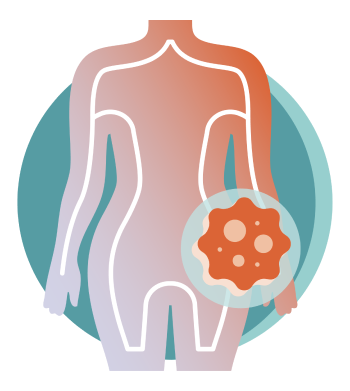
Where are biomarkers found in the body?
- Biomarkers can be genes or proteins in your cells
- Biomarkers can be found in different places, such as your blood, urine, or tissue
Doctors can use biomarkers to:

Make predictions
- Assess whether you have a higher risk of getting cancer
- Understand how your cancer may change over time

Track progress
- Monitor your cancer
- Determine whether your treatment is working

Find treatment options
- Figure out which treatments are most likely to help
- Create a tailored treatment plan
Why is biomarker testing important in ovarian cancer?
Not all ovarian cancers are the same. Doctors use the presence and/or levels of biomarkers (or their absence) to understand your cancer.
In fact, if your cancer tests positive for certain biomarkers, you may have different treatment options.